Edited English edition based on the source article. The original publication is linked below.
Kalavryta stands on the site of ancient Kynaitha. Its present name, meaning good springs, is thought to date from the Venetian period. During the German occupation, the town experienced a devastating massacre on 13 December 1943, when most of its male population was executed and the town was burned.
On Kapi Hill, on the road towards the ski centre, a large white cross and a memorial preserve the memory of those killed. The source refers to the names of 499 residents at the memorial. The stopped clock on the cathedral bell tower is another reminder of that day.
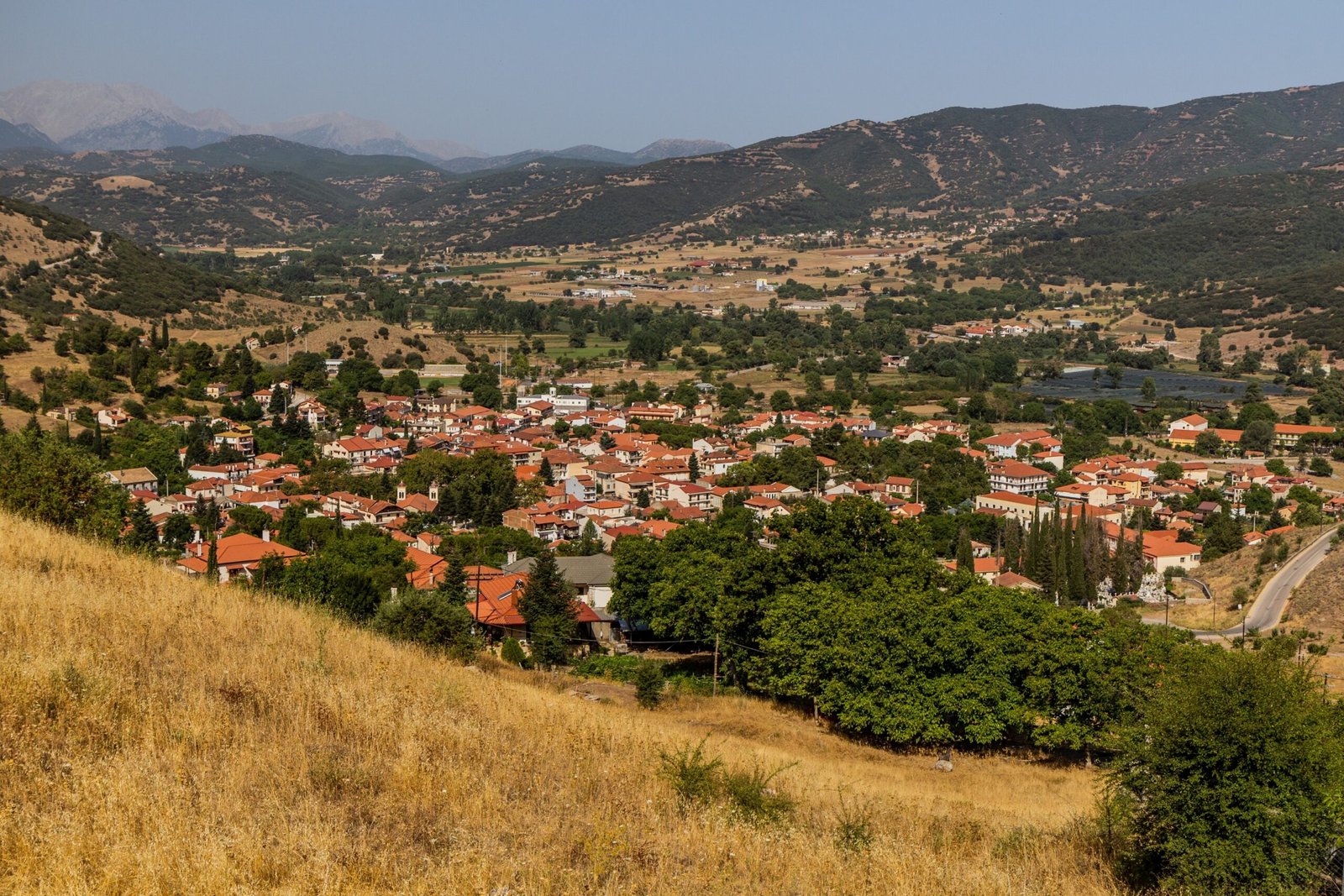
A walk through the town introduces its everyday life at an altitude of around 750 metres on the edge of Helmos. Residents and visitors meet along the pedestrian street for coffee, food and browsing the shops.
Further inside the town, Eleftherias Square, also known as Helmos Square, provides a quieter setting. A plane tree is associated in local tradition with a meeting of Zaimis, Petmezas and Fotilas before the 1821 Revolution. The Municipal Museum of the Kalavryta Holocaust displays photographs, recorded testimonies, maps, telegrams and personal objects.
The source links to the original publication. Schedules, prices and opening arrangements may have changed since it was written.
Explore nearby

Filoxenia Hotel & Spa
Kalavryta
A hotel near the main square of Kalavryta, with mountain views, Wi-Fi and access to local sights.
The Forbidden Stone House
Flampoura
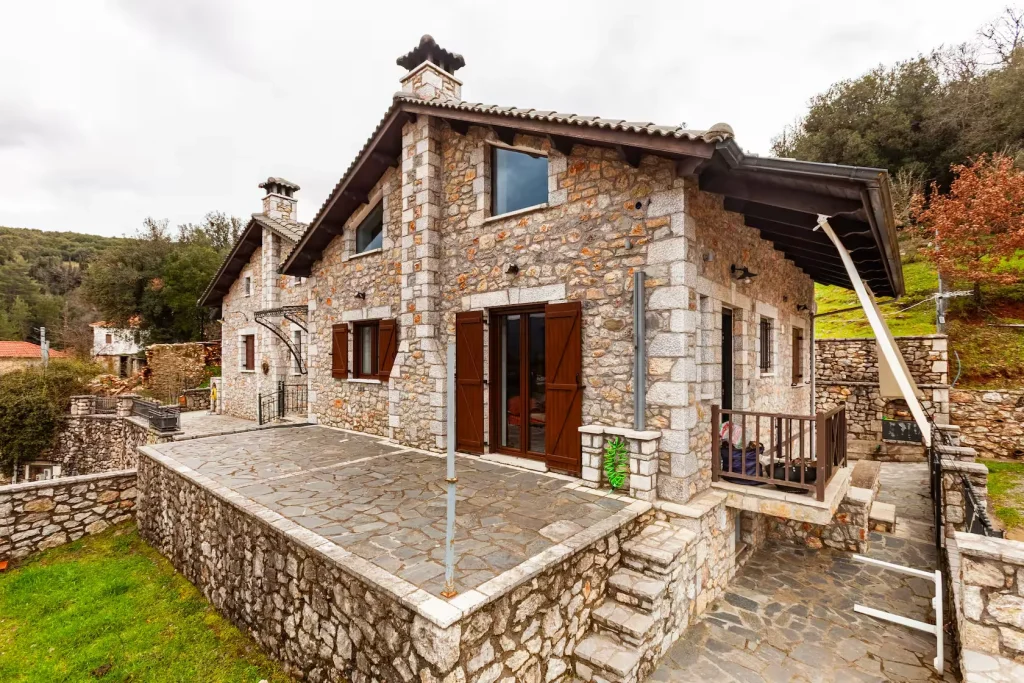
A stone house in Flampoura, 13 km from Kalavryta, with two bedrooms, a fireplace, a mountain-view courtyard and private parking.